Showing posts with label research. Show all posts

Thursday, July 19, 2007

UP TO SPEED

Vanuatu to Iceland
A year ago this week I mentioned that Vanuatu was the happiest place on earth. This year the New Economics Foundation have released a European Happy Planet Index. Iceland are on top (c/o The Guardian). "[H]appiness doesn't have to cost the earth."

Consumer Mush
I've been banging on about the growing ethical consumer market for a while now (1,2,3). It's been mostly Kiwi and UK research. Findings out of the US aren't so clear (c/o Gristmill). "The vast majority of people don't have very well-articulated views of the environment". That's not surprising given that "82% of Americans have neither read nor seen" Invonvenient Truth. I Wonder what the viewer numbers are here...

Tuesday, July 10, 2007

LEAVING THEIR MARK

Eats, shits, and leaves them at the landfill. And that's a good thing according to Kimberley-Clark.

If it means that your company sells more disposable nappies then of course it's a good thing.

The strange press release claims research has "found that the impact of burying disposable nappies in landfill sites was matched by the energy consumed and greenhouse gases generated by washing reusables or transporting them to laundries."

Apparently the study was conducted by the UK Environment Agency, but all I can find about nappies on their site is a cute baby pic asking whether you've thought about washables.

K-C logic has it that stuffing nappy after disposable nappy in a hole in the ground is better for the planet than reusable nappies. Clearly they've not heard of clean energy, efficient water use, or the energy network implicit in making, distributing, selling, and trashing disposable goods.

When I find the report I'll let you know. Flick me a note if you come across it in the mean time.

Update: Thurs 12th - still no further indicator of what's in the study, but Stuff are towing the corporate line. They also refer to North Canterbury disposable nappy composters who accept this spoon fed research.

Update: Fri 13th - as it turns out, the study is two years old and has been widely discredited. Adjusting for flawed research assumptions washable nappies are 31% better than disposable in terms of climate change impact.

Update: Fri 27th - Nandor has had a crack at Michael Laws for throwing the proverbial at the fan. Laws of course accepted the Kimberley Clark "analysis" and according to Nandor, Laws thinks "it is "ridiculous" for parents to be environmentally aware". Mind you, Laws must be onto something. He got rid of kerbside recycling in Wanganui.

Monday, March 05, 2007

SAFETY IN NUMBERS
A new wad of research has hit the headlines illuminating the strength of public opinion toward sustainable shopping.

New Zealand has traditionally lagged the key Western European and North American ethical consumer markets, but we're not too far behind.

Moxie Design has released updated findings (86kb pdf) in their Solution Seekers research. The Kiwi ethical consumer market has grown 23% in the last 18 months.

This builds on a couple of key previous posts of mine; most recently in calling for government legislation, and some important analysis (IMHO!) back in November. It also works with the concept I wrote about in the Capital Times a few weeks back.

National Radio reported (audio link) on the Moxie findings this morning - the bottom line is that one third of Kiwi consumers actively shop with an ethical mindset. It's been driven largely by increased climate change awareness with Moxie determining that 83% of us are aware of the issue.

Moxie research comes following last weeks release of less robust research from NZBCSD indicating that for 70% of Kiwis "a company’s environmental practices have a big influence on whether [they] buy their products".

These two results indicate the level of procrastination I wrote about in Capital Times - and also covered by the Guardian last week. For Kiwis, an "apples with apples" analysis says that 83% are aware of the issues but only 32% act accordingly. That 83% may be 80% or indeed 70% - regardless we're a little slow off the mark.

As that exquisite scene in Life of Brian shows us, there's no use "gabbing on about it. It's completely pointless and it's getting us nowhere", although slow, we're increasingly getting "off our arses" and putting money where our mouth is.

It's time to have the wee chat with your barista (and your grocer, your barman, your bookseller, etc). As the illustration above implies - it's pretty simple. In fact, here's a good idea: you chat away, in the meantime we'll talk to a whole lot of retailers for you... roll on ShoppingFix!

Wednesday, January 10, 2007

PAINT BY NUMBERS
I'm partial to banging on about numbers. The business case for engaging with sustainability principles is a case in point.

One good thing about numbers is that they often allow the painting of a simple picture of complex issues.

The argument surrounding binding environmental targets is for me a clear indicator of where numbers prove practical.

The Kyoto Protocol binds ratifying nations to an emissions target. The US and (largely) Australia reject binding targets. The limited impact of the voluntary NZ Packaging Accord mirrors that of voluntary industry led initiatives elsewhere. Whether it be emissions or waste or both, numbers usually point to mandatory obligations being the only real means of lowering impact.

Last week the Herald reported that nearly 80% of Kiwis "believed they needed to make lifestyle changes to reduce global warming". Labour (and whoever runs the show from 2008) have numerous polls to call on. Mandatory obligations on our producers and consumers are not the political hot potato that they once were.

Voters now accept that they need to make change - so economic incentives to promote pro-environment behaviour is sensible. Public opinion is clear (790kb pdf) and studies advocate a mandatory approach. Government can and should (en)act.

Thursday, November 23, 2006

THE 'IN' CROWD
Understanding consumer attitudes is key to illuminating the business case for addressing environmental impact. This is the only "sustainable" means of engaging your average business in change.

In developing the ShoppingFix concept I've done a fair bit of nerd-work on consumer behaviour. Recently our Trust has been doing some work for the Sustainability Trust - looking at the Wellie hospitality sector. A few key stats and studies have been handy.

Comparison of attitudes to those in other countries is exceptionally important. Especially as New Zealand is a long way behind when it comes to addressing consumer impact. And of course when we say consumer impact we are implying business impact.

A picture of the extent of "lag" is evident in three studies:

One: Nick Jones & Associates conducted NZ research concluding late 2005. They found that 58% of people aged 10+ "think more highly of companies that support charities/worthy causes". This isn't overly surprising, but what it does emphasise is that companies should communicate their efforts to their customers.

Two: Moxie Design were funded by the Shell Sustainability Fund to conduct NZ ethical marketing research earlier in 2005. Their Solution Seekers report (155kb pdf) shows that 26% of New Zealand consumers "purchase in accordance with their social and environmental values".

Three: The UK Carbon Trust concluded British research last month that found 66% of consumers want businesses to act on climate change, and that "environmental concerns influence about about 50% of buying decisions".

Clearly the way the question is posed is important (for some research in this field click the Compass Network link at right). But for me, and for Kiwi businesses, there are two key points:

* Kiwi consumers haven't put their words into action yet (58% v 26%).
* Taking the UK as a sighter, there is massive growth looming in the New Zealand "ethical consumer" market (26% v 50%).

Granted, the 26% figure was arrived at prior to An Inconvenient Truth and the Stern Review, so it will be higher today. But the UK research was also conducted pre Stern Review.

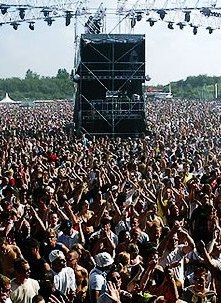
The basic facts are clear. More and more people are looking at how they consume. The "in crowd" is getting bigger.