Showing posts with label sustainable shopping. Show all posts

Thursday, August 23, 2007

ROUGH SAWN

There's been a bit of flak flying over sustainable logging the last couple of days.

Kwila, the Indonesian hardwood is under fire for causing dyslexia a clash with WTO rules if a ban on it's non-sustainable procurement is pursued.

Flash outdoor furniture is often kwila but it seems that nobody can guarantee the validity of sustainable timber sourcing. Not least one particular bastion of sprawled style whose kwila is "sourced from managed forests and TFT-The Forest Trust approved".

TFT no longer exist - having been superseded by TFG. Hardly a call for confidence.

A Christchurch outfit pushes kwila rabidly, as does one Auckland wholesaler.

National Radio aired a diplomacy piece Wednesday morning including an interview with Jim Anderton (6min audio). Not only is the timber produced unsustainably, apparently it's market presence here suppresses local timber prices.

It's the age old question - how much does your supplier know? When you're buying furniture - or any wood for that matter - ask where it came from and how much the supplier knows about how it got to them. For once I agree with Anderton.

There's one good thing from this though. All this talk of outdoor furniture must mean summers coming.

Sunday, July 29, 2007

FAR KENAF

It was my birthday last week. My folks always send me a card with a thoughtful message of optimism for the coming year.

This year the message also alerted me to one on the back...

My card was tree-free paper derived from the kenaf plant. It "grows 15 feet in just five months, uses no harmful chemicals in processing and is fully recyclable."

Tree Free Greetings of Canada made my card. Yep, my kenaf's a Canuck - and North America is where a fair bit of kanaf fibre comes from.

It just so happens that in the year of my birth a chap called Withers published findings from a kenaf trial in Palmy. But other than that of old Mr Withers, I can't find evidence of kenaf grown for fibre in New Zealand.

It's a pity. In the US it has an annual yield 4-5 times better than "forest". I'm assuming there would be similar comparison of NZ yield to pine.

They grow kenaf in Australia too - which begs the question: "where the kenaf are ya?"

Tuesday, July 10, 2007

LEAVING THEIR MARK

Eats, shits, and leaves them at the landfill. And that's a good thing according to Kimberley-Clark.

If it means that your company sells more disposable nappies then of course it's a good thing.

The strange press release claims research has "found that the impact of burying disposable nappies in landfill sites was matched by the energy consumed and greenhouse gases generated by washing reusables or transporting them to laundries."

Apparently the study was conducted by the UK Environment Agency, but all I can find about nappies on their site is a cute baby pic asking whether you've thought about washables.

K-C logic has it that stuffing nappy after disposable nappy in a hole in the ground is better for the planet than reusable nappies. Clearly they've not heard of clean energy, efficient water use, or the energy network implicit in making, distributing, selling, and trashing disposable goods.

When I find the report I'll let you know. Flick me a note if you come across it in the mean time.

Update: Thurs 12th - still no further indicator of what's in the study, but Stuff are towing the corporate line. They also refer to North Canterbury disposable nappy composters who accept this spoon fed research.

Update: Fri 13th - as it turns out, the study is two years old and has been widely discredited. Adjusting for flawed research assumptions washable nappies are 31% better than disposable in terms of climate change impact.

Update: Fri 27th - Nandor has had a crack at Michael Laws for throwing the proverbial at the fan. Laws of course accepted the Kimberley Clark "analysis" and according to Nandor, Laws thinks "it is "ridiculous" for parents to be environmentally aware". Mind you, Laws must be onto something. He got rid of kerbside recycling in Wanganui.

Wednesday, July 04, 2007

BAGS OF FUN

In April I posted about New Zealand's "first wave" of liberation from the plastic bag. Since then you'll have heard that a bunch of supermarkets are ditching the bag.

A problem remains though - what happens your mountain of non-recyclable shopping bags. Step up makezine.com who ripped an oldish idea from this great little blog. Make your own messenger bag!


Plans and instruction here (1,600kb pdf). All this stuff is out there on a Creative Commons license so use it well!

Hat tip: The Piton

Update: Click for the big picture. My ironed plastic.

The "degradable" plastic bags you get at many supermarkets might be a waste of time. I had a crack bottom right on pic. Patchy at best. Top right is a tortilla bag - full heat but no bonding and about as effective as the flour tortilla the bag used to contain.

The bread bag centre was folded 6-thick and ironed full heat. Not brilliant, but a followup 8-thick on mid heat looks good. It's a little small though. Unless you're into sewing, using bread bags for the final product will be tedious.

Big black bag is a standard record/clothes/shoe shopping bag folded 6-thick. Top end was full heat and a pretty good result - if anything a little too hot. Bottom end is half heat giving no bond.

Mid bottom is an 8-thick perforated supermarket fruit bag. Its crap and wont be used.

I'll be raiding friends cupboards over the next few weeks to get me some stock. This re-usable grocery bag lark has our cupboard a little thin...

Sunday, May 20, 2007

IF THE SHOE FITS...

I'm wearing the most comfortable shoes in the world. No, really. They're seriously comfy.

What I'm about to spell out is a seriously conscious but totally plausible degree of consumer information. This is what we as intelligent consumers should be able to find here in New Zealand.

In probably my most explicit carbon sin I tend to buy shoes from REI in the States - maybe once a year. They're air freighted rather than shipped from China - as your typical retailer would have them. My shoes have done an extra few thousand k's than the average kiwi pair.

On a purely "shoe miles" measure my shoe purchases are bad form. But the last two pair I've bought have not only been comfy, they've had some ethical credential behind them.

I mentioned Timberland in my Open Sesame post back in March. I've a pair of theirs which - had I brought them today - would come with their own "nutrition label". Timberland are serious about their place within their community.

But my new shoes are from Simple. Not only are they amazingly snug, they're made by a seriously environmentally conscious company. Simple's shoe ingredient list includes recycled PET plastic, hemp, recycled rubber, water based glues... the list goes on. Talk about good on the foot.

Further than that, in shipping my shoes from REI I have supported a consumer owned co-operative. That's right, REI, one of the largest outdoor goods retailers in the States, is owned by it's members. But wait there's more. REI report explicitly on their environmental stewardship.

REI are not too dis-similar to the impeccable Patagonia in adopting a staunchly positive business position within its community. We simply don't see that degree of community grounding here in New Zealand. So, either through ShoppingFix or through another push of mine I'm gonna do something about it.

There are some pretty cool shoe stories out there. Just ask.

In short, if the shoes fit, ask some questions. If they talk listen. If they're silent they've probably got something to hide.

Monday, April 02, 2007

BAGS NOT

A bunch of Kiwi retailers have announced that for them plastic shopping bags will become a thing of the past.

Bunnings gave away 3.5 million of them last year. By the end of this year there will be none in store. The Retailers Association have got on board - but their effort is limited to endorsing actions of retailers adhering to reductions "suggested" by the rather toothless Packaging Accord.

For a plastic bag recycling backgrounder read this recent British article. Many of the 17 billion British bags go to China for processing where agents can pay up to US$100 per tonne. Under EU rules it's OK to export recyclable material, but not waste.

A few Chinese villages eek out a living through reprocessing, but its "dirty, smelly, labour-intensive and poorly paid" work. What would we do if it weren't for the Chinese huh?

Oh, and for the record, plastic bags are generally better for the environment than paper.

Update: San Francisco city have banned the plastic shopping bag (yes, the whole city). FYI, its also "illegal to use someone's pre-worn underwear to clean windscreens" in San Fran.

Update: Thu 2 May: For Bunnings plastic bags are not a thing of the past afterall - yesterday they started selling them. Admirably, proceeds go to Keep NZ Beautiful.

Friday, March 23, 2007

OPEN SESAME

Of late there's been significant carbon disclosure announcements from Britain. Last year the Tesco CEO announced significant investment into "a revolution in green consumption".

The British staple that is Walkers cheese and onion crisps now has carbon footprint labeling (hat tip Celsias). US footwear maker Timberland have a footprint disclosure in each shoe box.

Giving customers the information they need is crucial - carbon disclosure is exactly the type of info the expanding conscious consumer market is after. It's a significant step along the road toward genuinely open business. Consumers can only make truly accurate decisions about the quality of goods and services when all relevant info is available.

In December the EU trade commissioner called for free trade on green goods that will enable carbon emissions reductions. Clean power generation equipment came in for specific mention. It is in this global trade context that the Kiwi push to highlight the true carbon cost of our production system is important.

New Zealand goods stack up when competitors disclose their full carbon contribution. For our exporters carbon accounting is crucial. The fact that "growing" a pack of Walkers crisps accounts for 44% of its footprint and transporting it contributes 9% is indicative of the primary production intensities required to produce in Western Europe.

Will knowledge of this lead the average consumer choosing "disclosed goods" over non disclosed? Probably, because the average consumer is becoming more aware. But only when we get to choose between "disclosed goods" are we getting somewhere.

The market has guarded profit formulae (and secrets in general) for so long that non-disclose for all sorts of wider community impacts is the norm. Or alternatively, the fact that businesses have no need to disclose means they can lay costs on the community in order to create more private profit. It's simply profiting from free use of the commons.

Suggestion that the neo-liberal economic model needs reigning in is not uncommon, countered of course by calls of "nanny state" over-intervention. There is a genuine and quite serious push toward a more open way of doing business. This extends down to the individual and is especially common for online trading - TradeMe or eBay ratings.

The concept of open humanity has been aired at the Half Bakery. I caught up with the chap who suggested the idea last year. His motives were much the same as what drives the conscious consumer - people do care. Ultimately this is why more consumer goods will be carbon labelled.

Just as open source software has enabled development beyond what a single entity could manage, carbon disclosure will open business practices on an unprecedented scale.

With open business there is opportunity for finding solutions faster. Sharing the load and sharing the benefits. If it's only carbon disclosure that is initially opened so be it - joint discovery of lower carbon profiles may well lead to open-ness throughout business.

Tuesday, March 20, 2007

ONES AND ZEROES

Electronic goods are some of the heaviest resource wasters in the consumer market. About time someone gave the industry a slap.

It just so happens that the largest industry player have slapped themselves. From 2008 Wal-Mart "will ask electronics suppliers to fill out a scorecard that will assess the sustainability of their product". Nice work - for US consumers at least.

When the time comes to upgrade your old kit you'll know where to go. Having cornered the US organics market the big boys are to offer the eco pledge of hundreds of electronics companies under one roof. End of life disposal, packaging, durability, upgradability and energy efficiency will all be addressed.

The British National Consumer Council have also hit out at electronics and energy efficiency this week. They propose a system similar to the EnergyStar ratings for washers and fridges. The NCC report advocates better consumer information - it can be downloaded here.

Monday, March 05, 2007

SAFETY IN NUMBERS
A new wad of research has hit the headlines illuminating the strength of public opinion toward sustainable shopping.

New Zealand has traditionally lagged the key Western European and North American ethical consumer markets, but we're not too far behind.

Moxie Design has released updated findings (86kb pdf) in their Solution Seekers research. The Kiwi ethical consumer market has grown 23% in the last 18 months.

This builds on a couple of key previous posts of mine; most recently in calling for government legislation, and some important analysis (IMHO!) back in November. It also works with the concept I wrote about in the Capital Times a few weeks back.

National Radio reported (audio link) on the Moxie findings this morning - the bottom line is that one third of Kiwi consumers actively shop with an ethical mindset. It's been driven largely by increased climate change awareness with Moxie determining that 83% of us are aware of the issue.

Moxie research comes following last weeks release of less robust research from NZBCSD indicating that for 70% of Kiwis "a company’s environmental practices have a big influence on whether [they] buy their products".

These two results indicate the level of procrastination I wrote about in Capital Times - and also covered by the Guardian last week. For Kiwis, an "apples with apples" analysis says that 83% are aware of the issues but only 32% act accordingly. That 83% may be 80% or indeed 70% - regardless we're a little slow off the mark.

As that exquisite scene in Life of Brian shows us, there's no use "gabbing on about it. It's completely pointless and it's getting us nowhere", although slow, we're increasingly getting "off our arses" and putting money where our mouth is.

It's time to have the wee chat with your barista (and your grocer, your barman, your bookseller, etc). As the illustration above implies - it's pretty simple. In fact, here's a good idea: you chat away, in the meantime we'll talk to a whole lot of retailers for you... roll on ShoppingFix!

Thursday, February 01, 2007

THE GREAT GLOBAL GREEN GOODS HUNT
Yesterday the Greens put out a statement that mirrors at least two of my previous posts.

Many of our export consumer markets are a hell of a lot more aware of the potential environmental impact of consumer goods than we are here. The food miles debate is evidence of that.

Nevertheless, Kiwi consumers are increasingly seeking goods that reflect a greater awareness of the impact of climate change. We're looking fix our shopping.

"If Government takes a lead now to help businesses re-evaluate their production and distribution methods, New Zealand can retain a competitive advantage" the statement says.

Tuesday, January 23, 2007

DEREK TROTTER WAS AN INTELLIGENT MAN
So intelligent in fact that British scientists are developing a test to determine whether bottled water is sourced from where it claims to be. Better late than never.

An episode of Only Fools and Horses screened in 1992 depicting a classic Delboy Trotter scam. Del, Rodney, and Gradad bottled and sold water sourced in their kitchen as "Peckham Spring" water.

That episode influenced one Lancashire chap, and had similarities to a failed 2004 Coca Cola product launch in the UK. They love their bottled water in the UK. Probably because their tap water is often rubbish.

In a 2005 NZ Consumers Institute survey, 44% of Kiwis "seldomly or never" purchased bottled water. Consumer have also got a summary of unsubstantiated NZ bottled water claims (rego needed). We instinctively know it: New Zealand tap water is generally fine (but maybe not from roof fed tanks). ESR administer a (pretty shitty) website summarising national quality data - as we know, it's good stuff but water is a resource under pressure.

The bottom line is this: buying bottled water is largely a waste of time and money. It's environmental cost is significant, and it doesn't make much sense to process something that does not need processing. Whats more (sorry, I couldn't help it) water and gaming consoles don't mix.

Don't bother yourself worrying whether the bottled stuff is any good. Do yourself and the planet a favour. Drink water from the tap.

Tuesday, December 12, 2006

FAKE PLASTIC TREES
Christmas is the time to be unbelievably wasteful. And just like fake plastic trees wear Radiohead out, Christmas is accelerating the wearing out of our planet.

The fake plastic tree vs "real" tree argument has been well publicised over the years. In co2 terms it's better to go real. Which makes right now a very edgy time for young evergreens. Why not buy a living tree and plant it in January?

Shopping is of course rife at Christmas. This has led to an "end compulsory consumption" campaign and at least two "buy nothing Christmas" campaigns run out of the US (where I nicked the image, above). But I'm no killjoy. I need sox.

Be honest: your sister doesn't need a new ab-cruncher or a pair of spotted slippers. Tell her to go for a walk or to resurrect those ugly trainers she wore once. Either that or gift a pair of chooks on her behalf. The goat over on the right is from Oxfam who offer a range of gifts under the banner "unwrapped". It's simple and it's clever. You give where it's needed, your sister gets the warm fuzzies.

The list of festive excess is a long one - ridiculous packaging and wrapping, gaudi Christmas lights, gluttony, and beverages from single use vessels. There are many handy web guides for a greener Christmas, but the most important thing is awareness. Think about what you're buying. Preferably Kiwi or fair trade.

Christmas is a great time for fun with family and friends. Enjoy it with a clearer conscience.

Thursday, November 23, 2006

THE 'IN' CROWD
Understanding consumer attitudes is key to illuminating the business case for addressing environmental impact. This is the only "sustainable" means of engaging your average business in change.

In developing the ShoppingFix concept I've done a fair bit of nerd-work on consumer behaviour. Recently our Trust has been doing some work for the Sustainability Trust - looking at the Wellie hospitality sector. A few key stats and studies have been handy.

Comparison of attitudes to those in other countries is exceptionally important. Especially as New Zealand is a long way behind when it comes to addressing consumer impact. And of course when we say consumer impact we are implying business impact.

A picture of the extent of "lag" is evident in three studies:

One: Nick Jones & Associates conducted NZ research concluding late 2005. They found that 58% of people aged 10+ "think more highly of companies that support charities/worthy causes". This isn't overly surprising, but what it does emphasise is that companies should communicate their efforts to their customers.

Two: Moxie Design were funded by the Shell Sustainability Fund to conduct NZ ethical marketing research earlier in 2005. Their Solution Seekers report (155kb pdf) shows that 26% of New Zealand consumers "purchase in accordance with their social and environmental values".

Three: The UK Carbon Trust concluded British research last month that found 66% of consumers want businesses to act on climate change, and that "environmental concerns influence about about 50% of buying decisions".

Clearly the way the question is posed is important (for some research in this field click the Compass Network link at right). But for me, and for Kiwi businesses, there are two key points:

* Kiwi consumers haven't put their words into action yet (58% v 26%).
* Taking the UK as a sighter, there is massive growth looming in the New Zealand "ethical consumer" market (26% v 50%).

Granted, the 26% figure was arrived at prior to An Inconvenient Truth and the Stern Review, so it will be higher today. But the UK research was also conducted pre Stern Review.

The basic facts are clear. More and more people are looking at how they consume. The "in crowd" is getting bigger.

Wednesday, November 15, 2006

REVOLTING
Brits have had enough. You probably have too. Some say that sustainability starts at home. In reality it often starts at the supermarket. Or rather it gets left at the supermarket.

A British Government minister yesterday called for a public revolt against "excessive and unnecessary" food packaging.

A friend highlighted a local example in a photo essay that's hanging on a wall somewhere in Wellington. I hate naming and shaming, but Sealord Tuna packs are a pathetic waste of resources.

In fact Britain's local environment minister is to spank the big boys (of supermarkets) for not addressing waste issues. Do you hear our David Parker backing up the Packaging Accord?

Of course not, because "
producers and packaging users will take more responsibility from the beginning to the end of the packaging lifecycle". There. Done. Perfect. The blessing of a voluntary, industry led Kiwi initiative.

Name and shame, and a sarkie 'tude in the same post isn't flash, but with any luck the Waste Minimisation Bill will come to the rescue. In the meantime maybe on your next shop you can ditch the debris.

Saturday, September 09, 2006

ARE YOU LOCAL?
The UK TV series League of Gentlemen is the epitome of inward looking small town life. The town of Royston Vasey fosters the extremity of attitude that big businesses often encounter when trying to set up in new locations: "you're only here to suck the life from our town."

I've posted about this before (here and here) - with emphasis on the impact of shopping malls. It turns out that in Gipsy Hill, London, the opening of a new Sainsbury's supermarket could offer a lifeline to a fading business community. From the perspective of many local small shop owners, Sainsbury's will bring in punters. But the shop owners will have to sell the "special stuff" - they'll have to differentiate.

Last week Sainsbury's announced an industry leading initiative. They're to pack a whole bunch of their self-branded foods in compostable packaging. Sainsbury's? Local economy friendly? Environmentally conscious? Maybe!

When will this hit New Zealand? Will the Waste Minimisation Bill facilitate it? It's a must. Compostable packaging of food will make the job of separating domestic organic waste even easier. If your lettuce rots in a plastic bag, both the goo and the bag invariably get trashed. If it's in a compostable bag the whole lot can be composted instead.

So rather than spout Royston Vasey-esque xenophobia, it looks like little stores can love the big outsider. And although the "plastic" bag has a questionable past, the homely carrot may soon feel at ease in the fridge.

More about: - - - -

Thursday, August 31, 2006

DISCO INFERNO
In a true reflection of where rampant shopping gets us, the Beeb has a piece about one man's quest to ditch his high falutin' branded days.

In a kind of burn or get burnt antic he's promised to destroy all of his branded kit as a display of his newfound freedom. Is this a first step toward a more sustainable shopping ethic? It's certainly some welcome fashionista honesty.

Like many a sad tale of lust and despair, the hard times emerged from early habits:

"Once I had nagged my parents to the point of buying me the shoes I was duly accepted at school, and I became much happier as a result."

In posting previously on the satisfaction of shopping (eg. referring to it as a national pastime), I hadn't considered the happiness that comes not simply from being adorned in Armani, but also from being checked out while festooned in FUBU. Go figure.

The comments that follow the article are predictable enough. Most are of the "don't burn it, you idiot, give it away" persuasion which highlight the obvious flaw in our naked crusaders plan. Just how he intends to get through his life as a "music promoter and style magazine editor" without becoming an outcast remains to be seen.

One thing is for sure, if this brand burning is to be as iconic as 60's bra burning, it's a step forward. Maybe the "give, don't burn" message will get through - a sure winner for goodwill stores.

Thursday, July 20, 2006

CACAO KICKS
Of late I've developed a little chocolate snobbery. I've got such a sweet tooth that previously I'd pretty much indulge in whatever chocolate I could get my hands on. But a couple of recent trips to Peoples Coffee in Newtown have now forced me to place quality over quantity.

To go with their fair trade coffee, Peoples stock fair trade chocolate from Trade Aid. I don't know if it was that particular coffee/choccie taste combo that got me started, but now I just can't get enough of Trade Aid chocolate. Oh, and this seems an opportune moment to mention that its my birthday next week...

Where was I... yes, with Trade Aid chocolate you can of course be sure that the grower has been fairly engaged, and that his/her growing practices are sustainable. If you add that to the foggy headed feeling that wells up just thinking of the taste, you know Trade Aid chocolate is a winner.

Wellington is blessed with being the global HQ of Whittakers (well "Whittakers de Porirua" to be more accurate). For me, Whittakers is not quite as good as the Trade Aid equivalent, but still, it's a pretty fine block. A quick scan through their website reveals a whole raft in onfo you wouldn't usually expect from a choccy purveyor. Their cacao comes from Ghana and cocoa butter from Singapore and Malaysia. No mention of fair trade, but still, good to know the country of origin.

Those chaps down in Dunedin deserve a mention here too. Cadbury chocolate is good. No doubt about it. But as good as Whittakers? No. And as good as Trade Aid? Not even in the same ball park. Cadbury are owned by a British PLC, so their benefits for the NZ economy on a "chocolate bar for chocolate bar" basis are not as good as Whittakers. One feature of the Cadbury range is Milk Tray. Tasty, yes, but these choccies come in Plantic trays made from non-GM corn starch rather than plastic. Now that's gotta be a good thing. The only problem is that Plantic dissolves in water - so the product needs another layer of plastic around it for protection. Counter-productive? Maybe, but it's a good start down the road toward product stewardship.

Slap my butt and call me porky, but as its my birthday next week I'll be having some more chocolate. It'll be Trade Aid chocolate because it's so damn tasty, and it's fair.

Monday, June 12, 2006

DOWN TO YOUR LOCAL
A few weekends back I caught a public notice placed in the DomPost by Moore Wilson. They were after stall holder expressions of interest for a farmers market in Porirua. Fantastic! A local farmers market is a very real means of re-establishing vibrancy in the local produce market. They not only strengthen community links, but also ensure a greater degree of local consumer revenue reinvestment. They're a more sustainable alternative to large retail outlets who insist on trucking fruit and veg the length of the country.

This article outlines how one farmer has been able to retain control of sales and ensure quality through running a stall at the Hawkes Bay farmers market. An article in today's DomPost provides a broader picture in highlighting a farmers market resurgence - possibly as "a backlash against the supermarket ownership duopoly" which I have written about previously. A national network of markets is aided by the Farmers Market NZ Assn. - who provide advocacy and regulatory guidance for new and existing markets. One assumes that Moore Wilson and FMNZA are collaborating on the Porirua proposal.

A little research revealed that a fellow Wellington blogger discussed the concept in broad terms only a month ago. He expressed a desire to see a farmers market in the CBD. Not likely. Well, not a comprehensive, dynamic farmers market at least.

Farmers markets traditionally operate on weekends only - and some only monthly. For a dynamic farmers market to fly in the Wellington CBD an exceptionally versatile building would have to be found/built that would not otherwise be used on weekends. Unfortunately existing weekend uses are the bread and butter for most public buildings.

Land values and rents are simply too high for a Wellington CBD farmers market to be viable as a stand alone entity. It would be fantastic to see one in the CBD - and if you've been to Suva you'll know of a pretty good example of how it can work.

Unfortunately the small fruit and veg market at the Willis-Vivian corner is an anomaly, the weekend market on Wakefield St is getting the sqeeze from other "waterfront" uses, and the existing Saturday Porirua vegie market is a fair-weather-early-bird affair.

Aside from a clever property-share arrangement, the only viable Wellington CBD (almost!) option would seem to be subsidised use of land at somewhere at Centreport or the rail yards. Centreport are clearly heading in a more commercial direction, leaving WCC-Ontrack negotiation for use of the rail yards the only forseeable prospect.

No wonder Moore Wilson went for a Porirua location. And good on them for taking the plunge. I hope we'll be able to get to it from a railway station...

Thursday, June 08, 2006

RETAIL MADNESS
Am I so detached from reality as to not comprehend what happened with the opening of Sylvia Park shopping centre today? I'm reminded of the impeccable Modest Mouse: "...when the earth folded in on itself..." What were people thinking?
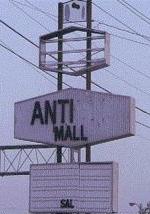
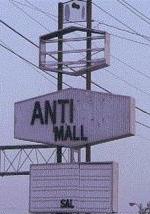
The Herald, Frogblog, Scoop/Transit, and a raft of other reports on the opening are plain evidence that malls are for the most part ridiculous. Were the masses attracted by cut price goods? Was it the chance to be the first to gorge at a brand new leisure facility? Or were punters simply keen to get out on the road and check out a massive selection of stationary cars?

Thumb through the current North and South and you'll find a particularly interesting article on the mall phenomenon. It covers the gamut: a mum who brings her kid up in a mall, teens who get a sense of neighbourhood from one, credit card schtuk, and even a hair in a bun retail fiend who "visit[s] a different mall every day to explore Auckland." Bloody'ell.

An earlier thread I wrote lamented the negative impact of large format retail on the local economy and community. Unfortunately I don't have any local knowledge to put this in a Mt Wellington context, but the North and South article quotes an Auckland retail consultant: "it's a transfer of community control to corporate control, with profits going almost always overseas to shareholders who don't care about the locals."

Maybe the world IS folding in on itself. Or Mt Wellington is at least. The critics of my perspective will of course scream "typical anti-consumer would rather see us all living in caves". Of course consumers have choice, but where's the sense in following an economic model that lets business ignore negative externalities?

It's not about big business being bad. Its about some big business doing business badly. Kiwi Income Property Trust - the owners of Sylvia Park (and, incidentally, Northlands which I alerted to in the earlier thread) are in the business of getting people in cars and debt (as are many other large format retail proponents). Direct business impacts such as traffic jams, paved paradise, and Mastercard bills are clearly foreseeable. To me these are indicators of bad business.

So long as the likes of KIPT serve up the punters, shops will be happy in their not so little mall cocoon. Retailers need a good reason to consider the big picture: "how does 'how we do business' impact our community?" A healthy community means healthy bottom lines. And visa versa. The little picture can be fudged to satisfy a 2, 5, or 10 year investment horizon, but only a big picture conception will address the needs beyond... Is that a call for ShoppingFix I hear?

Wednesday, May 17, 2006

BASIS FOR RESPONSIBLE BUSINESS
"Let my people go surfing" is the 2005 book written by Patagonia founder and owner Yvon Chouinard. I'm about 3/4 through - having purchased recently through alonovo. The book is an amazing documentary of how Patagonia, the outdoor clothing and equipment company, has evolved into an environmentally conscious business.

In presenting ShoppingFix info to some of the businesses we're working with I included a seminal quote from Chouinard: "every time I've done the right thing for the environment I've made a profit". This quote is given substance in his book. You may recall that I'm typically not one for shameless product endorsement unless there's some benefit for my cause, but this book should be everywhere. It's an absolute "must read" for anyone involved in business.

In short Chouinard is an advocate of an ecological world view. Business practice should reflect the environment in which its suppliers, staff and clients (customers) exist - and for an outdoor clothing and equipment company this is vitally important. The book shows how it is possible - and essential - "to blend work, play and social duty and be all the more successful as a result". Highly inspirational - and even more so if you're into the outdoors.

Find a copy if you can, and read it. Hey, even email me if you like, maybe I'll lend you my copy...

***You'll note that I've upped the font size. What do you think? Good for the peepers? Too clunky? Regardless, keep your feedback coming.***