LAND BANK
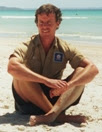
Last week a British conservation charity announced the purchase of 3,600 ha. of land in the Pantanal - the planets largest wetland that spans Brazil, Bolivia, and Paraguay. I spent three weeks in late 2001 visiting a friend living in Bonito, Brazil - bordering the Pantanal. It's a spectacularly clean, bountiful, and serene place. The photo (left, from flickr) could easily be one of the many fish I swam with in one of the countless crystal clear streams. The Pantanal is so worthy of protection.
The British charity hopes that its purchase will help save a large area of native vegetation from being cleared for agriculture. With similarities to vast areas of the Amazon basin, the Pantanal has lost approx 17% of it's native cover - often to soy production. The purchase is the latest in a long line of high profile South American land accumulation projects in the name of conservation.
Names like Soros, Benetton, Stallone (yes, the sly one), Chouinard (of Patagonia clothing fame), Ted Turner (CNN), Doug Tompkins (Esprit, North Face) are etched in the land holding annals of rural South America. Mostly in southern Chile and Argentina where the winds are wild and the peaks snowy.
But many locals see protection through foreign ownership as a dangerous ceding of sovereignty. Some even see it as a direct consequence of aggressive US foreign policy. Numerous attempts of "re-nationalisation" have occurred. Criticism of the situation in South America has some remarkable similarities to the high country land tenure review process here in New Zealand. One commentator says "natural heritage [is] being robbed" in a process where the government decides to either buy or sell leased farmland that comes up for lease renewal.
The logic is that the government holds ecologically important land (for ever), and the farmers hold the arable areas. But when the government decides to buy, the price is often criticised as being too high, and when it sells, the price too low (numerous views on the tenure review process can be found on Scoop).
In addition to conservation, the similarities between tenure review and South American eco-philanthropy include loss of iconic landscapes to private ownership. In New Zealand a tone of impending development is often taken by those reporting on the issue. Whether that be correct or not, the same base fear exists - "what if we loose land/landscapes forever?"
Topically then, foreign ownership of New Zealand land is explored in a film appearing briefly at the Paramount next week. The Last Resort will screen for one week only. It touches on (apparently) the loss of iconic kiwi landscapes and lifestyles. South America may be experiencing colonisation by philanthropists, The Last Resort is pitched as exposing "colonisation by corporation".
Update 8th Feb: the Guardian has more criticism of South American eco-philanthropists. "...Argentinian press has suggested [Doug] Tompkins might be a covert CIA operative securing US access to the aquifer." ...all righty then....
Thursday, January 18, 2007

Monday, January 15, 2007
VIRGIN
Richard Branson - the Knight of "sex sells" - is on deck at the moment. Reports from his meeting today with Climate Change Minister David Parker will be interesting. Stay tuned. It turns out that Parker was in touch following Branson's announcement last year that he'd throw 1.6bn quid at renewable fuels. And why not stick your hand out when there's product development to be paid for.
Parker is trumpeting the likes of Marlborough's Aquaflow, Genesis Research's BioJoule, and Auckland's LanzaTech.
Lets hope that at least one of these companies is sexy enough for Branson - one of the few genuine characters of global business. I'll have an update for you tomorrow.
Update: No explicit reports of the meeting, but Aquaflow director Nick Gerritsen loves the exposure. Also, this morning Aquaflow announced a $5m capital raising - prospectus available online.
Saturday, January 13, 2007
MINT SAUCE ANYONE?
Why did I not know about this earlier? In the best traditions of Bad Taste we have a new lo-budget splatter film on it's way. Black Sheep comes home in March.
The synopsis is something like "10 sheep for every citizen - what if they all went maaaaaaad....?" There seems to be strong reference to genetic engineering and the multiple purposes to which you can put mint sauce. Dunno about you, but I can't wait unil March 22nd!
As it turns out a whole pile of distributers are trying to get their hands on the flic. It's had the odd home review, and at least one from its screening at the Toronto Film Festival. Hat tip The Piton.
CURRENCY
It's the new year and a lot of folks have been busy over the last little while. Here's a snapshot to get you current:
US Bi/Tri-Partisan Climate Initiative: Senators Obama, McCain, and Lieberman proposed a bill yesterday that aims to cut US GHG emissions by 2% p.a. Hat tip Gristmill.
Keepin' Wellie Pumped: Wellie Tourism launched the Texture website last month to "hook you up with the best spots to spend your nights and where to recover during the day". Hat tip WellUrban.
UK Big Biz Explore Green Potential: A taskforce has been established under the watch of the Confederation of British Industry to investigate carbon taxes and offsetting. (See this June-06 post for prev. reports).
Neutralising PC's: Last week Dell introduced a carbon offset program available to global customers from this April.
Motoring advice: Maybe a little late for your summer roadie, but the UK Energy Saving Trust has a 10 point list (32KB PDF) for fuel efficiency. Hat tip Edie.
EU Climate Change Initiative: The EU proposed an ambitious region wide GHG reduction plan as part of their new energy strategy. The Economist has an interesting logistical analysis of the issue.
Blog Traffic: If you want to up your blog traffic by 100% then post about about C*l*ay Aike*n. Bloody hell. I've learned a new term though: "claymate". Very scary.
Plenty of food for thought...
SATURDAY SENSITIVITY - AFRICAN MELODY
Next in the ongoing Saturday Sensitivity series is Harry Belafonte. This is probably my favourite Muppets piece that doesn't involve Raquel Welch. It's mainstream magical and quite possibly the epitome of sensitivity.
Thursday, January 11, 2007
CONSUMERISM RUN AMOK - CLAY OF AIKEN
Here's another regular(ish) piece that falls on the lighter side of sustainability. Consumerism Run Amok is dedicated to the humour of mediocrity in the music industry. Consumerism Run Amok has emerged from my boredom (as a music lover) with reading three star music reviews. Why should we be interested that another ordinary music release has hit the shelves? We're seeking entertainment dammit!
If the work under review isn't entertaining surely the review itself can at least raise a giggle. Therein lies the potential of one star music reviews. Consumerism Run Amok is about celebrating the humour needed on the part of a reviewer with a one star release in their hands.
So, without further adu: the first amok subject is the Rolling Stone review of a recent album from that weaselly little dribbler Clay Aiken. "...[M]aking an album this soul-suckingly awful must have taken some hard work".
Just to make sure I did some checking: "...an exercise in earnest melodrama that" "...is still pure vanilla custard" according to USA Today. And no, I have not heard a note of this album...
Wednesday, January 10, 2007
PAINT BY NUMBERS
I'm partial to banging on about numbers. The business case for engaging with sustainability principles is a case in point. One good thing about numbers is that they often allow the painting of a simple picture of complex issues.
The argument surrounding binding environmental targets is for me a clear indicator of where numbers prove practical.
The Kyoto Protocol binds ratifying nations to an emissions target. The US and (largely) Australia reject binding targets. The limited impact of the voluntary NZ Packaging Accord mirrors that of voluntary industry led initiatives elsewhere. Whether it be emissions or waste or both, numbers usually point to mandatory obligations being the only real means of lowering impact.
Last week the Herald reported that nearly 80% of Kiwis "believed they needed to make lifestyle changes to reduce global warming". Labour (and whoever runs the show from 2008) have numerous polls to call on. Mandatory obligations on our producers and consumers are not the political hot potato that they once were.
Voters now accept that they need to make change - so economic incentives to promote pro-environment behaviour is sensible. Public opinion is clear (790kb pdf) and studies advocate a mandatory approach. Government can and should (en)act.